 |
| http://www.smbc-comics.com/index.php?db=comics&id=2275#comic |
Sunday, July 31, 2011
SMBC: War is a Victimless Crime (Webcomic)


Tuesday, July 26, 2011
Who Holds the Federal Debt (CQ.com)
Check out the Graphic on the Website
From the article:
More than $9 trillion of the total debt is held by “the public” — a broad category that includes individual investors in the United States and overseas, the Federal Reserve system, and foreign governments and central banks. The remaining debt is held by government accounts, mostly trust funds established to collect dedicated revenue to pay for such programs as Social Security, Medicare and highway construction.
From the article:
More than $9 trillion of the total debt is held by “the public” — a broad category that includes individual investors in the United States and overseas, the Federal Reserve system, and foreign governments and central banks. The remaining debt is held by government accounts, mostly trust funds established to collect dedicated revenue to pay for such programs as Social Security, Medicare and highway construction.
Sunday, July 24, 2011
Women's Bodies Selective With Sperm (Article)
 |
| Image from awomanscorned2010.blogspot.com |
From the article:
A woman's body may be unconsciously selective about sperm, allowing some men's to progress to pregnancy but killing off the chances of less suitable matches, an Australian researcher said Wednesday.
Will Soda Soon be Taxed? (Article)

From the article:
Though experts increasingly recommend a diet high in plants and low in animal products and processed foods, ours is quite the opposite, and there’s little disagreement that changing it could improve our health and save tens of millions of lives.
Rather than subsidizing the production of unhealthful foods, we should turn the tables and tax things like soda, French fries, doughnuts and hyperprocessed snacks. The resulting income should be earmarked for a program that encourages a sound diet for Americans by making healthy food more affordable and widely available.
Simply put: taxes would reduce consumption of unhealthful foods and generate billions of dollars annually. That money could be used to subsidize the purchase of staple foods like seasonal greens, vegetables, whole grains, dried legumes and fruit.
“Excise taxes have the benefit of being incorporated into the shelf price, and that’s where consumers make their purchasing decisions,” says Lisa Powell, a senior research scientist at the Institute for Health Research and Policy at the University of Illinois at Chicago. “And, as per-unit taxes, they avoid volume discounts and are ultimately more effective in raising prices, so they have greater impact.”
Currently, instead of taxing sodas and other unhealthful food, we subsidize them (with, I might note, tax dollars!). Direct subsidies to farmers for crops like corn (used, for example, to make now-ubiquitous high-fructose corn syrup) and soybeans (vegetable oil) keep the prices of many unhealthful foods and beverages artificially low. There are indirect subsidies as well, because prices of junk foods don’t reflect the costs of repairing our health and the environment.
The need is dire: efforts to shift the national diet have failed, because education alone is no match for marketing dollars that push the very foods that are the worst for us. (The fast-food industry alone spent more than $4 billion on marketing in 2009; the Department of Agriculture’s Center for Nutrition Policy and Promotion is asking for about a third of a percent of that in 2012: $13 million.)
Health-related obesity costs are projected to reach $344 billion by 2018 — with roughly 60 percent of that cost borne by the federal government. For a precedent in attacking this problem, look at the action government took in the case of tobacco.
A study by Y. Claire Wang, an assistant professor at Columbia’s Mailman School of Public Health, predicted that a penny tax per ounce on sugar-sweetened beverages in New York State would save $3 billion in health care costs over the course of a decade, prevent something like 37,000 cases of diabetes and bring in $1 billion annually. Another study shows that a two-cent tax per ounce in Illinois would reduce obesity in youth by 18 percent, save nearly $350 million and bring in over $800 million taxes annually.
(Currently, 86 percent of food ads now seen by children are for foods high in sugar, fat or sodium.)
Friday, July 22, 2011
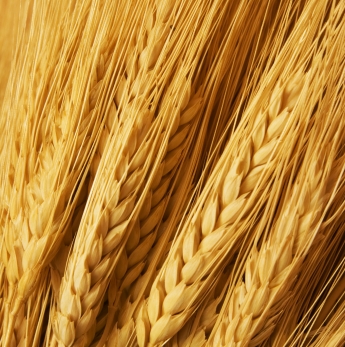
The Truth About Gluten (Article)
 |
| Image from http://whatisgluten.net/ |
From the article:
Gluten is a protein found in wheat. It's a binding agent, which means it makes ingredients stick together. If flour didn't contain gluten, breads would turn out like pancakes.
The main difference between gluten intolerance and celiac disease is that with gluten intolerance your body's immune system doesn't nuke your intestines. Instead, your body just can't digest gluten (so you still end up with bloating and other issues). Either way, you should be opting for a gluten-free diet.
Aside from digestive discomfort, having an immune system that constantly attacks your intestines has serious repercussions. Those with celiac disease are at increased risk of arthritis and potentially colon cancer.
Get tested to see if you have an issue with gluten via antibody or genetic testing. You might not have celiac disease since only 1 in 133 people in America have it, but you could easily be gluten intolerant.
Some of us can eat gluten with no problem, but if you're battling the bloat, I don't recommend taking it on faith that you're one of those people.
At the very least, test how you feel with and without gluten. If you're completely symptom-free with it in your diet, then getting biopsied is a waste of time (and you'd never be able to convince your doc to do it). But if you're noticing mysterious stomach issues, test a gluten-free diet.
Wednesday, July 20, 2011
Crop Swap Begins in Berkeley (Short Article)

From the article:
Help is on the way. Beginning tonight the people behind the newly formed grassroots group Transition Berkeley invite residents to share their harvest at a Crop Swap in the public park next to the Ohlone Greenway on Sacramento Street.
Berkeley is just one of a grassroots network of more than 300 *transition towns around the globe organizing their communities to become more resilient, self-reliant and sustainable.
It couldn’t be simpler: you show up with your freshly harvested lettuces or lemons and share or swap them for some plums or potatoes. That’s it. No money changes hands.
“We hope this will be a forum for people to get to know others in the community who grow produce and exchange ideas about growing food,” said co-organizer Carole Bennett-Simmons
*The Transition Movement as defined by transitionus.org
The Transition Movement is comprised of vibrant, grassroots community initiatives that seek to build community resilience in the face of such challenges as peak oil, climate change and the economic crisis. Transition Initiatives differentiate themselves from other sustainability and "environmental" groups by seeking to mitigate these converging global crises by engaging their communities in home-grown, citizen-led education, action, and multi-stakeholder planning to increase local self reliance and resilience.
Tuesday, July 19, 2011
Floating Hotels (Short Article)

From the article:
“Each cabin would use solar energy to move and have networked GPS systems, allowing the user to enter a simple command in order to return to the main hotel.”
Subscribe to:
Posts (Atom)